Here we explain why it is not that difficult to qualify for the Mining Charter, provided that key compliance areas like ownership, LED projects, and housing and living conditions (HLC) are in order.
See below a Mining Charter Score calculated for a client.
| Mining Charter Scorecard | MC3 Weighting | Your Mining Charter Score |
|---|---|---|
| Ownership | ||
| Existing Mining Rights | Y/N | Y |
| New Mining Rights | Y/N | NA |
| Mine Community Development | Y/N | Y |
| Housing and Living Conditions | Y/N | Y |
| Employment Equity | 30% | 27% |
| Inclusive Procurement | 40% | 40% |
| Human Resource Development | 30% | 15% |
| 100% | 82% | |
| Your DMR/DTI rating | Level 2 |
| DTI Levels | DMR Scorecard | Compliant? |
|---|---|---|
| Level 1 | Ring-fenced element + 100% | Yes |
| Level 2 | Ring-fenced element + 80%–100% | Yes |
| Level 3 | Ring-fenced element + 70%–80% | Yes |
| Level 4 | Ring-fenced element + 60%–70% | Yes |
| Level 5 | Ring-fenced element + 50%–60% | Yes |
| Level 6 | Ring-fenced element + 40%–50% | Non-compliant |
| Level 7 | Ring-fenced element + 30%–40% | Non-compliant |
| Level 8 | Ring-fenced element + 20%–30% | Non-compliant |
| Non-compliant | Ring-fenced element + <20% | Non-compliant |
| Non-compliant | Ring-fenced element not met | Non-compliant |
Interpreting the Mining Charter Score above
This scorecard summarises a company’s alignment with the Mining Charter (MC3) across the core compliance elements assessed by the DMRE and DTI. Each element is measured either on a yes/no basis or against weighted percentage targets, with the combined result producing an overall Mining Charter score.
In this example, the company achieves an aggregate score of 82 percent, which places it at a Level 2 DMR/DTI rating. This indicates strong overall compliance, with particular strengths in inclusive procurement and community development, while also highlighting specific gaps in employment equity and human resource development where focused intervention is required.
The DTI Levels table above translates the overall score into a formal compliance category. It shows how meeting the ring-fenced elements, together with the percentage score achieved, determines the applicable DMR/DTI level and whether the operation is considered compliant. This provides a clear, defensible snapshot of current standing, as well as a practical roadmap for improving or maintaining Mining Charter compliance over time.
Why Qualifying Isn’t Hard
- Human Resource Development (HRD):
The target for HRD is typically 100% of the designated percentage of the company’s salaries and wages. For example, this would mean 5% of the total salaries and wages budget. In our table, the HRD score in each permutation stands at 20%, which amounts to 67% of the HRD target (67% * 5% = 3.35% of total salaries and wages). As you can see, the requirements for HRD are not overly demanding, especially considering the resources mines typically allocate to training and development. - Inclusive Procurement:
Historically, procurement targets have been one of the more complex aspects of compliance, but recent developments have simplified this process. With the new codes being thrown out, mines now have more flexibility in meeting these targets. This means that even at 40% of the target (as seen in some permutations above), a mine can still easily comply and achieve a Level 5 rating. - Employment Equity (EE):
Today, most mining companies already comply with Employment Equity requirements, which makes this a less challenging aspect of the scorecard. Mines typically already have systems in place to ensure fair representation, which means that achieving 50% of the EE target, for instance, is quite achievable.
The Bigger Picture
Ultimately, what this means is that achieving compliance with the Mining Charter is not an insurmountable task. While certain elements, such as HRD, procurement, and EE, need attention, the reality is that many mines are already well-positioned to meet these targets with minimal effort. Assuming the core areas of ownership, LED projects, and HLC are sorted, compliance essentially becomes a matter of fine-tuning, rather than a significant overhaul of current operations.
| Permutation | Employment Equity | Inclusive Procurement | Human Resource Development | Total Score |
|---|---|---|---|---|
| Permutation 1 | 11% (37% of 30%) | 20% (50% of 40%) | 20% (67% of 30%) | 51% |
| Permutation 2 | 12% (40% of 30%) | 19% (48% of 40%) | 20% (67% of 30%) | 51% |
| Permutation 3 | 13% (43% of 30%) | 18% (45% of 40%) | 20% (67% of 30%) | 51% |
| Permutation 4 | 14% (47% of 30%) | 17% (43% of 40%) | 20% (67% of 30%) | 51% |
| Permutation 5 | 15% (50% of 30%) | 16% (40% of 40%) | 20% (67% of 30%) | 51% |
| Weighted Target | 30% (100%) | 40% (100%) | 30% (100%) | 100% |
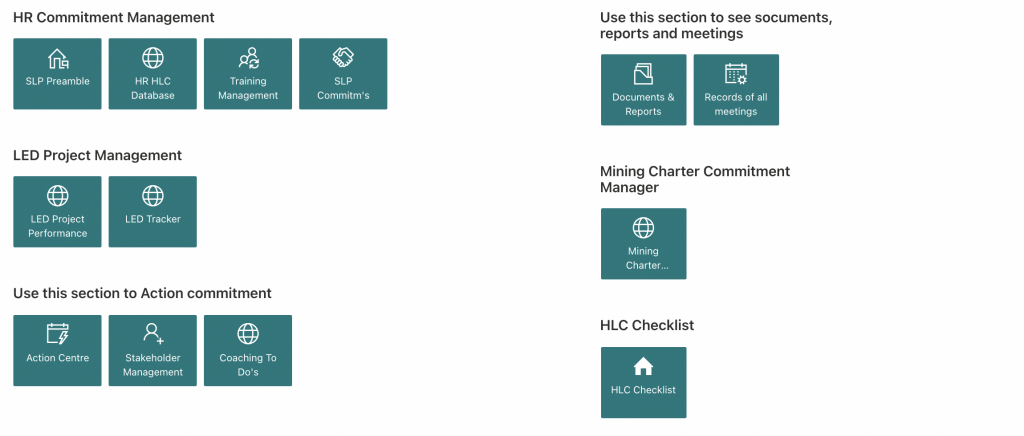
We can calculate your Mining Charter Score with excel or you can use our software to manage your Social and Labour Pland and Mining Charter commitments with ease
We adapted our Software to suite your current compliance needs. If for any reason you may be confused as to what your commitments are right now, we can assist.
Gerrie Muller, B Admin MBA, had been assisting mines with Social and Labour Plan compilation and compliance since the publication of Mining Charter 2004. The mine he assisted range from large listed mining groups, to junior miners and small-scale miners.